


Instagram DMs have always felt private. You send memes, make plans, vent to friends, share photos, flirt, reply to stories, and probably forget half of it lives inside an app owned by Meta.
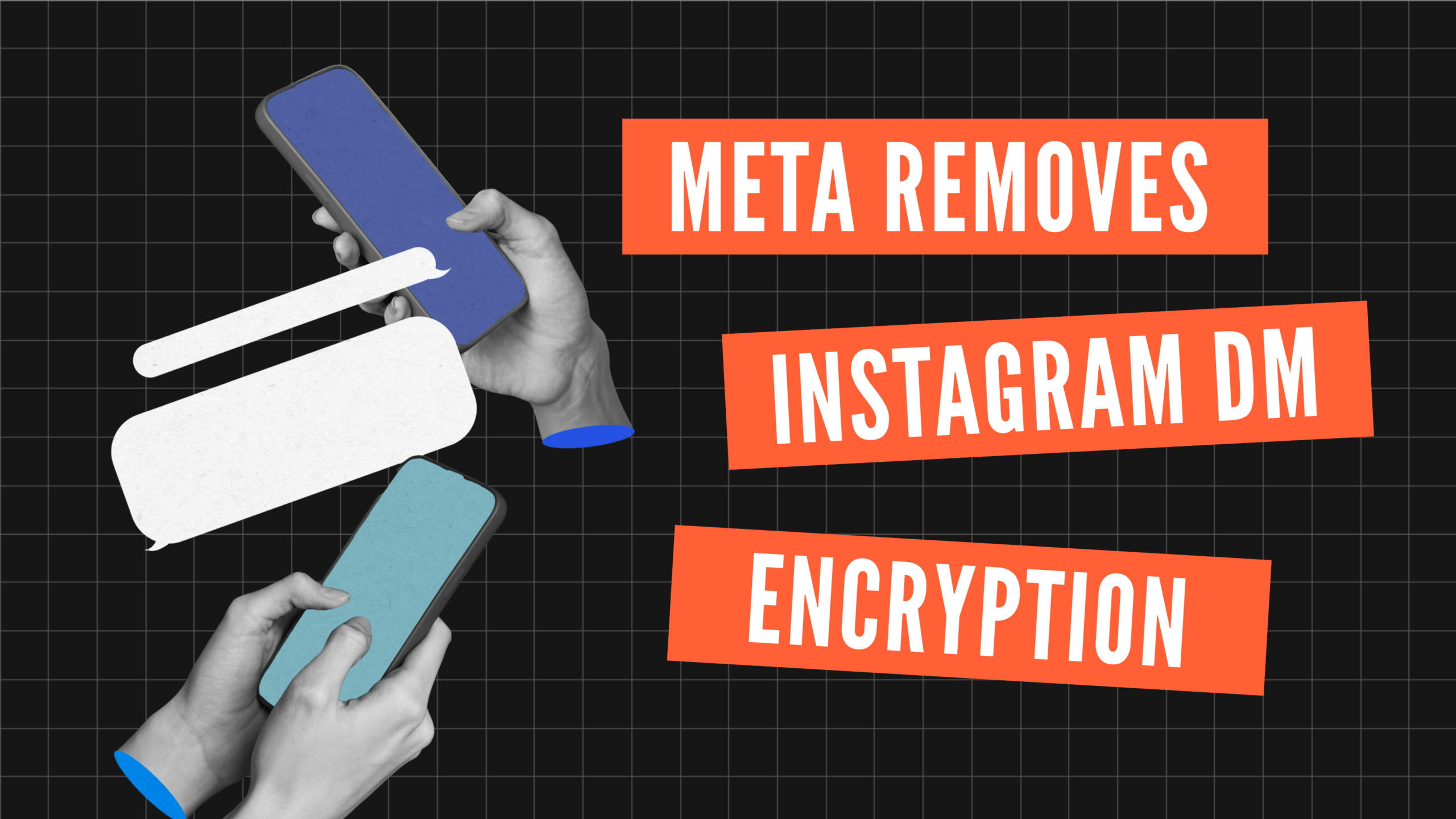
But now there’s a privacy update worth paying attention to: Meta has discontinued end-to-end encrypted messaging on Instagram DMs as of May 8, 2026. The feature was optional and not turned on for everyone, but for users who did have encrypted chats, that extra layer of protection is going away.
So… should you panic? No. 😅
Should you be smarter about what you send in DMs? Definitely. ✅
First, what is end-to-end encryption? 🔒
End-to-end encryption, or E2EE, means that only you and the person you’re messaging can read the conversation.
Not the app.
Not the platform.
Not random third parties.
Not even Meta.
Without E2EE, your messages may still have standard security protections, but they are not private in the same way. Instagram DMs should not be treated like a fully private vault. 🧠
What this means for Instagram users 👀
For most people, the biggest change is mindset.
Instagram DMs are still useful for casual conversations, sending posts, planning hangouts, and replying to stories. But they are not the best place for sensitive information.
That includes things like:
- Passwords or login codes 🔑
- Personal documents 📄
- Bank info or payment details 💳
- Private photos you would not want shared 🖼️
- Sensitive conversations about work, relationships, identity, safety, or legal issues 💬
- Anything you would be uncomfortable seeing screenshotted, forwarded, hacked, or exposed 🚩
Even with encryption, there has always been one big truth about DMs: the person on the other end can still screenshot, save, or share what you send.
Encryption protects messages in transit, but it does not protect you from someone misusing the conversation after they receive it. 📸
The potential risks
The main concern is not that Instagram suddenly becomes “unsafe” overnight. It is that users may assume their DMs are more private than they actually are.
Here are the risks to keep in mind:
1. More platform access 🏢 Without E2EE, Instagram may have more technical visibility into message content than it would in a fully encrypted chat.
2. Legal or data requests ⚖️ Platforms can sometimes be required to provide user data in certain legal situations. E2EE makes message content harder or impossible for a platform to access. Without it, that privacy barrier is weaker.
3. Hacks and breaches 🕵️♀️If a platform, account, or device is compromised, sensitive message content can become a bigger target.
4. Scams inside DMs 🚨Instagram DMs are already a popular place for phishing links, fake brand deals, romance scams, crypto scams, fake customer support accounts, and hacked-account messages.
5. A false sense of privacy 🫣A DM feels casual, but that does not mean it is secure. If you would not put it in an email, do not automatically put it in an Instagram chat.
How to stay safe 🛡️
You do not have to stop using Instagram DMs. Just use them with more awareness.
- Keep sensitive conversations on encrypted apps 🔐
- Do not send passwords or codes in DMs 🚫🔑
- Think before sending private photos or documents 📲
- Watch out for suspicious links 🔗🚩
- Turn on two-factor authentication ✅
- Review who can message you 👥
- Save anything important 📥
Bottom line 💡
Instagram DMs are fine for memes, plans, and everyday conversations. But with end-to-end encrypted messaging gone, they should not be your go-to place for private or sensitive information.
A good rule: if it could hurt you, embarrass you, expose you, or be used against you, do not send it through Instagram DMs. 🚩
Your privacy is not about being paranoid. It is about knowing where your information goes — and choosing the right place to share it. 🔐
