



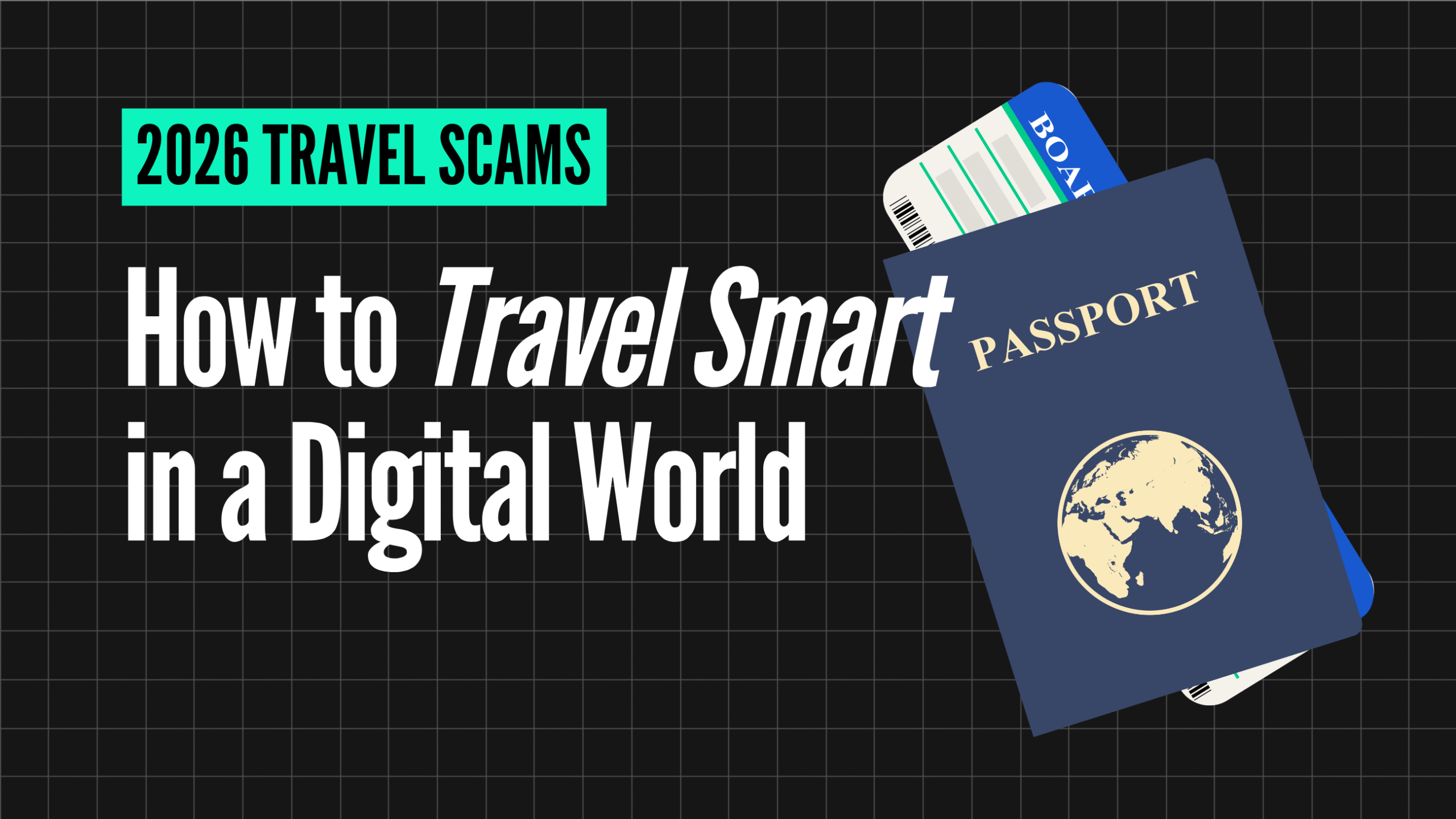
How to Travel Smart in a Digital World
Travel plans? Locked.
Your digital safety? …also needs to be.
Travel should feel like a reset — new city, new energy, maybe a little main character moment. But in 2026, your trip doesn’t just live in the real world… it starts online. And that’s exactly where scammers are waiting.
From fake Airbnb listings to “urgent” airline emails that look way too real, travel scams are getting smarter — and way more common.
The good news? You don’t need to be paranoid — just a little more aware.
✈️ Why are travel scams everywhere right now?
Short answer: convenience.
Long answer:
- We book everything online
- We move fast (especially on our phones)
- And we trust what looks legit
Scammers know this.
They copy real listings, clone websites, and send messages that feel urgent so you don’t stop to think. Add AI into the mix, and suddenly fake emails + websites look almost identical to the real thing.
And when you’re traveling? You’re distracted, in a new environment, and more likely to make quick decisions.
That’s their window.
🚩 The most common travel scams (that still work)
If you know these, you’re already ahead:
1. Fake booking websites
Looks like Expedia… isn’t Expedia. You pay → no reservation exists.
2. Cloned Airbnb / rental listings
Real photos, fake owner. You send money → you show up → nothing’s there.
3. “Urgent” emails from airlines or hotels
“Your flight changed — click here ASAP.”
Spoiler: it’s a phishing link.
4. Fake customer support numbers
You Google a number → scammer answers → asks for payment/info.
5. Public Wi-Fi traps
Free airport Wi-Fi → not secure → your data gets intercepted.
All of these rely on one thing: you not slowing down.
💸 The real cost (it’s not just money)
Yeah, you could lose money.
But worse:
- You land with no hotel
- You miss reservations
- You’re stuck figuring it out in real time
- Your personal info is exposed
It turns your trip into stress mode instantly — and that’s the part people don’t talk about enough.
Think of this like packing your digital essentials:
- Book through trusted platforms only
- Double-check URLs (yes, every time)
- Don’t click random email/text links
- Use strong + unique passwords
- Turn on 2FA (especially for travel + banking apps)
- Save confirmations somewhere secure
This takes maybe 10 extra minutes — and can save your entire trip.
📱 While you’re traveling: stay sharp
You don’t need to be hyper-vigilant, just intentional:
- Avoid logging into sensitive accounts on public Wi-Fi
- Use data or a VPN whenever possible
- Don’t scan random QR codes (yes, even at restaurants)
- Keep your phone locked + close
- If something feels rushed or weird → pause
That “wait… this feels off” instinct? Trust it.
⚠️ If something feels off
Don’t panic — just slow down.
- Verify directly with the company (not the link they sent)
- Check your bank activity immediately
- Change passwords if anything seems compromised
- Screenshot + document everything
There are also tools (like CyberFlex’s cybersecurity resources) to help you report and recover if needed.
🧳 The takeaway
Travel should be about the experience — not damage control.
You don’t need to overthink everything. But a few small habits:
- double-checking links
- pausing before clicking
- protecting your accounts
…go a long way.
Because the goal isn’t to avoid traveling.
It’s to move smart while you do it.
🔐 Stay ready, not stressed
Cyber awareness = freedom to actually enjoy your trip.
So yeah — pack your fits, plan your itinerary…
just don’t forget to protect your data too.
Stay Safe.
Stay#CyberFlexed!
