




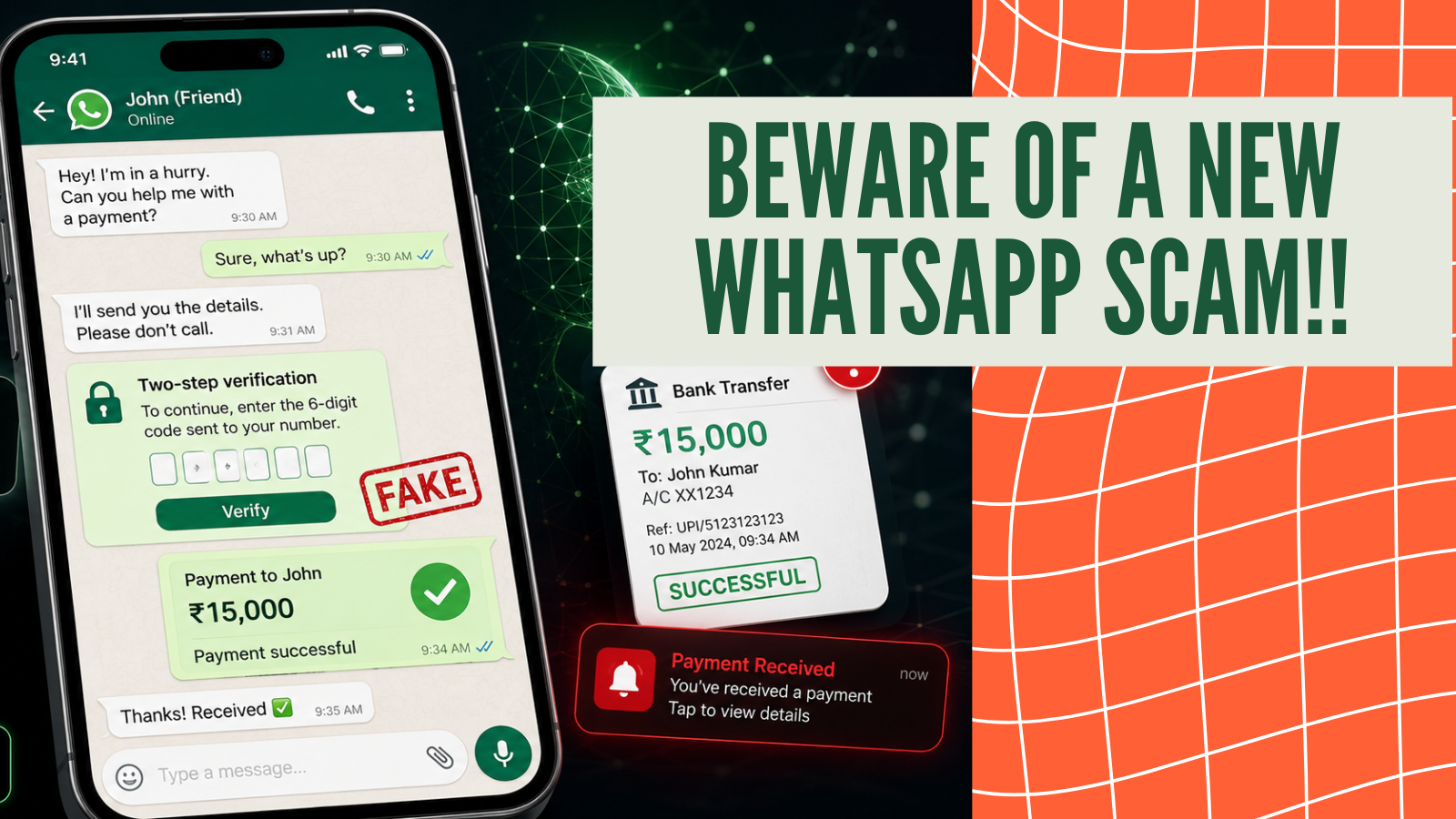
How scammers may be using stolen accounts, old conversations, and AI to make their messages dangerously convincing
You get a WhatsApp message from someone you know.
They greet you normally. They mention something you have talked about before. Then they explain that they are traveling, their bank transfer is delayed, and they need you to cover a payment for them—just temporarily, of course.
They even send a screenshot showing that the money is supposedly on its way.
It feels believable because the message is not coming from a random number. It is coming from your friend’s actual WhatsApp account.
That is what makes this scam so dangerous. Scammers may combine stolen accounts, impersonation, fake banking screenshots, past conversations, and even AI-generated messages to make it feel like you are talking to someone you trust.
Here is how the scam can unfold—and how to stop it before you lose money. 👇
Step 1: The Fake WhatsApp Warning 📲
The scam may begin with a message designed to look like an official notice from WhatsApp.
It might say:
- “Your verification has not been completed.”
- “Set up two-step verification immediately.”
- “Your account will be suspended if you do not take action.”
The goal is to make you panic and act before you have time to think.
The message may ask you to click a link, enter your login information, or share a verification code. But that code is meant to protect your account—not something you should ever send to another person.
Once a scammer gets it, they may be able to take control of your WhatsApp account.
And let’s be real: these messages often arrive when you are busy, exhausted, working, traveling, or dealing with ten other things at once. You may assume you messed up a setting and follow the instructions without checking.
That is exactly what the scammer is counting on.
Step 2: They Pretend to Be You—or Someone You Trust 🎭
After taking over an account, scammers may begin messaging the account owner’s friends, relatives, coworkers, clients, or other contacts.
But they do not always ask for money immediately.
First, they may try to sound normal.
They might send:
- A casual greeting
- A quick life update
- A reference to a mutual friend
- A comment about a past conversation
- A question about something you discussed before
This helps lower your guard.
Because the message is coming from the person’s real account—and may reference real details—you may have no obvious reason to question it.
AI could make this even harder to spot. A scammer may use it to create messages that sound more natural or imitate someone’s writing style, tone, slang, or usual way of communicating.
That means the old advice to “look for weird wording” is not enough anymore. 🤖
Step 3: The Money Request Starts to Sound Reasonable 💸
Once the scammer has gained your trust, the conversation shifts toward money.
They may claim:
- An international transfer has not gone through yet.
- They need to make an urgent purchase.
- They already sent you the money, but it will take a few days to arrive.
- They are traveling and cannot access their bank.
- They need someone in their home country to make a payment for them.
- Their card or banking app is temporarily not working.
The story usually is not completely ridiculous. It is designed to sound like something that could actually happen to the person you know.
The scammer may even mention a product, trip, job, or situation you have previously discussed with that person.
That personal context can make the request feel safe—even when it is not.
Step 4: They Send “Proof” That Is Not Actually Proof 🧾
To make the story more convincing, the scammer may send a screenshot of an online bank transfer, payment confirmation, or notification claiming that money has already been sent to you.
But screenshots can be edited, recreated, or completely fake.
A picture saying that money was transferred does not mean the money is sitting in your account.
Before making any payment, open your own banking app and check your transaction history directly. Do not rely on a screenshot sent through WhatsApp, Instagram, email, or any other messaging platform.
No money in your account? No payment from you. Period. 🛑
Step 5: They Use Urgency to Shut Down Your Common Sense ⏰
Technology is only one part of the scam. The other part is emotional pressure.
Scammers may catch you when you are:
- Overwhelmed with work, school, childcare, or errands
- Traveling or communicating across different time zones
- Distracted during a holiday or vacation
- Worried about inconveniencing someone
- Afraid an account will be suspended
- Trying to help someone you care about quickly
You may notice that something feels slightly off—but tell yourself you will double-check later.
Unfortunately, “later” may be after the money is gone.
Falling for a scam does not mean someone is careless or unintelligent. Even people who work in technology or cybersecurity can make mistakes when trust, urgency, and exhaustion collide.
Step 6: Real and Fake Messages May Appear in the Same Chat 😵💫
One especially confusing part of an account takeover is that genuine messages from the real person and fake messages from the scammer may appear in the same WhatsApp conversation.
From your perspective, the conversation may seem completely natural.
You might call the person, receive no answer, and then get a message saying, “Sorry, I couldn’t answer earlier.”
That response feels normal—but it may have been sent by the scammer watching the conversation.
Scammers may also delete messages, hide evidence, or prevent the real account owner from seeing what was sent.
That is why any conversation involving money should be verified somewhere else.
Call the person using a phone number you already have. Message them on another platform. Ask a mutual friend or relative to confirm what is happening.
Do not use the contact information provided in the suspicious message itself.
Step 7: The Scam Spreads to More People 🔁
Once scammers control an account, they may send similar requests to dozens of contacts.
Friends. Family members. Coworkers. Teachers. Clients. Business partners.
Meanwhile, the real account owner may have no idea that people are receiving requests for money in their name.
After someone becomes suspicious, scammers may delete conversations, block contacts, or move on to another account.
If you think your WhatsApp has been compromised, act quickly:
- Save screenshots of suspicious activity.
- Warn your contacts through another platform.
- Review linked devices and account settings.
- Contact WhatsApp through its official support options.
- Contact your bank immediately if money was sent.
- Report the incident to local law enforcement when appropriate.
How to Protect Yourself ✅
Any time someone asks you to send money through WhatsApp, pause—even when the message appears to come from someone close to you.
Remember:
🔐 Never share a WhatsApp verification or two-step verification code.
📞 Confirm money requests through another communication method.
🏦 Check your own banking app before believing that a transfer was made.
🔗 Do not open suspicious links claiming your account will be suspended.
⚙️ Access your settings directly through the official WhatsApp app—not through a message link.
📣 Warn your contacts immediately if you think your account has been taken over.
🚔 Contact your bank and the police as soon as possible if you lose money.
Your Best Defense? Pause Before You Pay.
Scammers want you to move quickly. Your power is in slowing the conversation down.
Even when the request appears to come from your best friend, sibling, coworker, or partner, take an extra minute to confirm that it is really them.
Call them. Ask a question only they would know. Check your bank account yourself.
A slightly awkward phone call is much better than sending money to a scammer. 📵💸
Stay safe!
Stay #CyberFlexed!
